
Two-minute read.
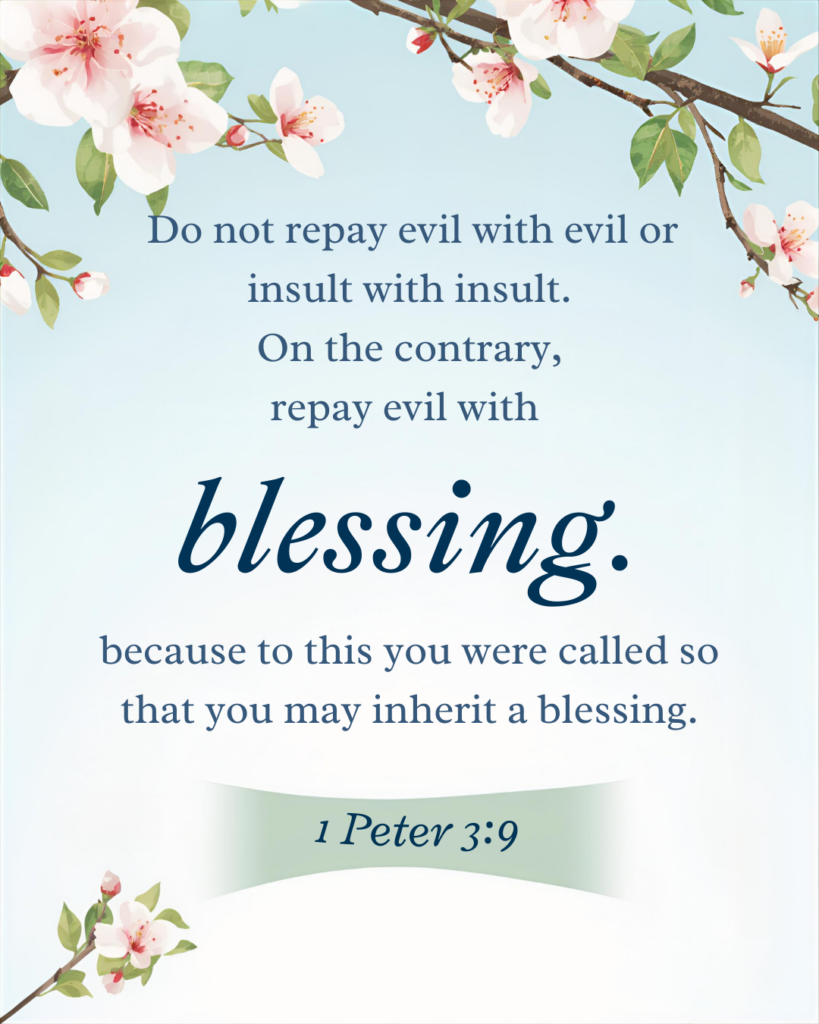
Peter offers a countercultural way to live: respond with intention rather than instinct. When someone wounds us, we naturally want to strike back. But Peter calls us to something different—to bless instead.
Rooted in Christ, we receive our calling. We wounded Jesus with our thoughts and actions, yet He chose the cross. He took on the punishment we deserved and responded to our sin with mercy. Because we belong to Him, He calls us to do the same—not because others deserve it, but because we belong to God’s family.
Releasing retaliation makes room for God’s peace. When we choose to bless instead of repay, we position ourselves to receive a blessing. Peter wrote to believers who knew pain—people who faced misunderstanding, mistreatment, and persecution. He gave instructions for real-life hurt, unfair treatment, and strained relationships.
Living this out requires intention. When someone cuts me off in traffic, everything in me resists praying a blessing over them—especially when their carelessness puts me at risk. But I choose to do it anyway. Not because they deserve it, but because I refuse to hold on to the offense. When I ask the Lord to protect them and get them safely to their destination, something shifts in me. The grip of frustration loosens, and I’m able to let it go.
When we ask God to help us see others through His lens, we begin to look beyond the surface. Hurting people hurt people. Wounded people wound others. But as followers of Christ, we can stop the cycle. We can choose not to strike back, but to bless.
The Greek word for bless, eulogeo, means to speak well of, to invoke good, to act with goodwill.[1] We actively respond to hurt with goodwill. God calls us not just to avoid retaliation, but also to do good toward those who have intentionally caused harm.
Abundant living requires dying to self. Only through divine strength can we obey Christ and experience the blessing that follows. To live abundantly in Him, we must choose to bless.
Live with intention.
Bless with expectation.
Trust that God sees—and His faithfulness to you as you walk in obedience.
Journal Questions:
How can I bless instead of retaliate?
How does praying help you bless others?
When have you received a blessing after blessing someone who hurt you?
Application:
Speak well of someone who hurt you.
[1] Strong, James. Strong’s Exhaustive Concordance of the Bible. Hendrickson, 1890. Entry G2127.
