
Trusting God

Living on Mission

Two-minute read.

When I think of Jesus’ light shining, I think of a Sunday school teacher in my late 20s or early 30s. Her light shone so brightly that I instantly felt loved when I entered her presence. Over the years, I’ve met several ladies whose Godly love flowed so freely that you couldn’t help but feel it.

Jesus calls us to live in a way that reflects His light to the world. Like lamps illuminate rooms, we should brighten the world around us with our presence. Our faith should shine through our words, actions, and the way we treat others. We don’t need to seek attention or recognition; instead, our lives should point people to God’s goodness and love.

In the Sermon on the Mount, Christ describes His followers as the light of the world. When we show kindness, extend forgiveness, serve someone in need, or encourage someone struggling, our light shines. Small acts of obedience can make a meaningful difference in someone’s life.

You never know how your actions will affect someone else. But when you follow Jesus, they will have an impact. We don’t shine our lights for recognition, but to bring glory to the Savior. When others see Christ’s love reflected in our lives, they have an opportunity to recognize His goodness.

One Sunday, I saw a friend at church and immediately opened my arms to hug them—a simple, thoughtless action. Imagine my surprise when my friend shared later how much they needed that hug. Struggling in their faith, they moved forward with hope.

And I didn’t even know it.

You may never know how God will use a simple act of kindness to encourage someone or help them see the Savior in a new way. But you can trust that when you let the Lord’s light shine through you, it will bring light in a dark world.

Spend time in God’s word daily. Seek His guidance in your life. Follow His commands, and obey quickly. As you do, your light will begin to shine so brightly that the darkness will flee. People will know the love of Christ in a fresh, new way.

Journal Questions:

  • How can you reflect God’s light through your words, attitudes, and actions today?
  • Who in your life needs to experience God’s love through a simple act of kindness or encouragement from you?
  • How can you ensure your good deeds point others to God rather than to yourself?

Application:

Let your faith shine through your words and actions today so others may experience God’s love and give Him glory.
Trusting God

Following God’s Lead

Two-minute read.

During my years as a flight attendant, before cell phones and YouVersion, I often ended my days by finding the Gideon Bible on the nightstand beside the hotel bed. I’d flip open the book to a random passage and read until I found something that gave me direction. Feeling lost, alone, and unsure of myself, I found comfort in reading God’s word.

Recently, I listened to a podcast that discussed the Bible’s historical accuracy and different perspectives on its authors and books. In theoretical conversations, people love to debate the truth and accuracy of the best-selling book in history. Typically, I don’t enter into these debates because they don’t have definitive answers.

But I have found that applying Biblical principles and ways to my life leads to truth and abundant living.

David, author of Psalm 32, reminds us that God doesn’t leave us to navigate life on our own. He promises to guide us, give us wisdom, and watch over us as we walk through life’s seasons. We may not understand His leading, but we can trust His character and knowledge to lead us on the path best for us.

We don’t have to figure everything out on our own. By trusting the Lord to guide our steps, we can live in His protection. God guides us through Scripture, prayer, wise counsel, and circumstances that help us recognize His leading. Our heavenly Father desires to lead us forward.

In the surrounding verses, David celebrates forgiveness and the security of a right relationship with the Savior. The promise of guidance follows, reminding us that the Lord wants more than to rescue us from our past. He wants to lead us into abundant life with Him.

When you begin looking for the Lord’s guidance, you will find it as I did all those years ago in lonely hotel rooms. Or this morning, while reading my Bible, a Scripture convicted me of something I needed to do. Even though I’ve read through the Bible more times than I can count, I still find guidance in it each morning.

God desires to guide our steps. His word leads us on the path of righteousness. When we seek Him, He will direct our way.

Journal Questions:

  • What decision or situation in your life do you need to trust God to guide you through?
  • How can you become more attentive to God’s instruction and direction in your daily life?
  • What makes it difficult for you to trust God’s path when you cannot see the outcome, and how can you surrender that uncertainty to Him?

Application:

Trust God to direct your steps today by seeking His wisdom, listening to His instruction, and following where He leads.

Trusting God

When Worry Knocks

Two-minute read.

“We don’t know what starving is,” a friend said to me one day when I used starving to describe my hunger. I’ve never forgotten that moment from so many years ago; it gave me a new perspective on hunger.

 I have never starved. Born to a middle-class family in America, I’ve always had food on my table, clothes on my back, and a bed to sleep in at night.

Yet somehow, I became a worrier.

When Jesus spoke these words, He addressed something that competes with our trust in God: anxious concern about whether we will have enough.

When the Israelites wandered in the desert for forty years, God provided manna from heaven. Each morning it appeared on the ground, fresh and delightful. The Lord gave them only one command: gather only enough for today.

“But some of them didn’t listen and kept some of it until morning. But by then it was full of maggots and had a terrible smell.”

Exodus 16:20 (NLT)

Human nature makes us want a little extra, “in case something happens.” But God gives us what we need for today. He doesn’t meet tomorrow’s need today. The Lord lives in the present with us, and He wants us to stay present with Him. As Jesus reminds us, He takes care of the birds of the air; He’ll take care of us, too.

By pointing to the birds, Christ gives us something ordinary to look at. They don’t plant crops or store up harvests in barns, yet God provides for them. And then He asks the pivotal question: Aren’t you far more valuable to Him than they are?

Jesus gets to the heart of the matter.

If God cares for His creation, how much more does He care for His children?

Christ doesn’t tell us to stop worrying. Instead, He reminds us of our place in God’s family. Our heavenly Father knows our needs and will provide for them. We may not know how the Lord will provide, but we can trust that He will.

Journal Questions:

  • What are you currently worrying about, and what would it look like for you to place that concern in God’s hands today?
  • Where in your life do you need to remind yourself that your Heavenly Father knows what you need and cares deeply for you?
  • What can you learn from the birds about trusting in God’s provision rather than carrying tomorrow’s worries today?

Application:

Take time to look at the birds and how well God cares for them. Remind yourself that He cares even more for you.

Trusting God

Anchored in Christ

Two-minute read.

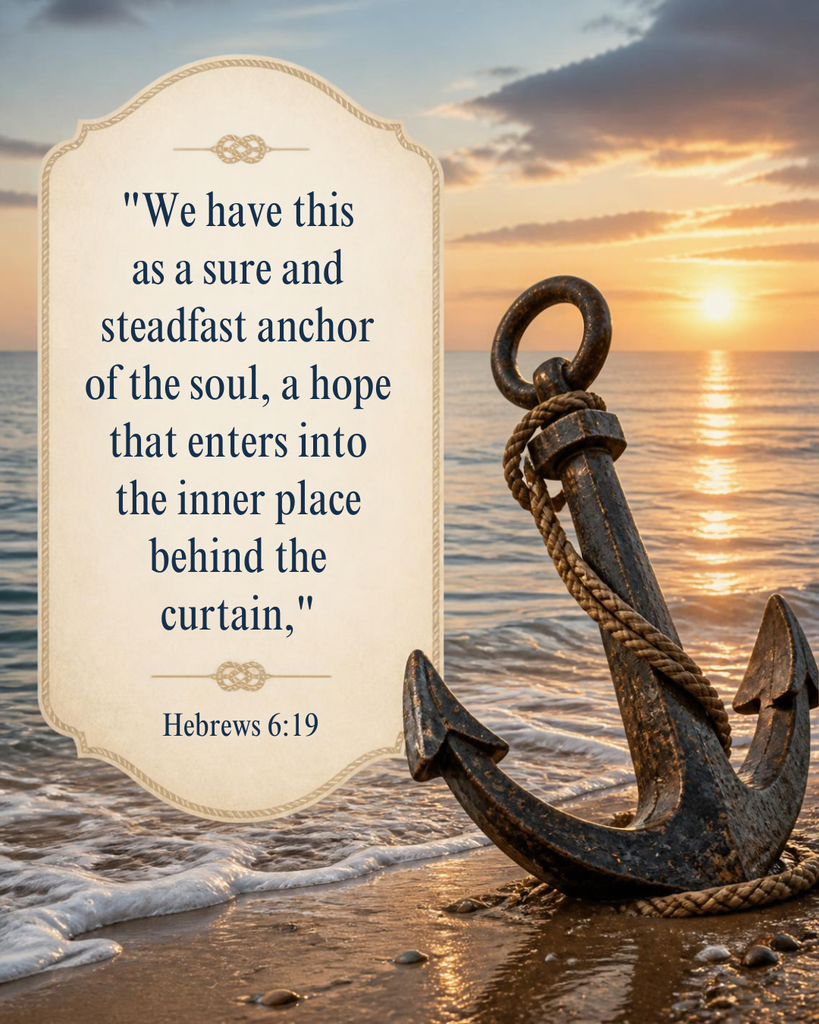
Anchors hold us steady.

Living in coastal Virginia, on warm, sunshiny days, you will see boats anchored in the water, usually clustered together, while their occupants float lazily beside them. In the early morning hours, you will find fishermen sitting silently on the deck, fishing lines in the water, anchors keeping their crafts in one spot. And during the off-season, boats sit along the shoreline, empty, anchored to their spots, waiting for their next outing.

In the Mediterranean world, when the Hebrews received this letter from an unknown author, they depended on anchors to keep their boats secure against winds and waves that threatened to carry them away. Using familiar imagery, the author paints a spiritual picture of hope in God’s promises, giving believers stability in unstable circumstances.

Using language from the Jewish worship system, the writer uses the anchor to represent more than just dropping it into the sea; it also represents a way to enter the “inner sanctuary behind the curtain.” The sanctuary represented God’s presence, separated by a curtain, that the high priest entered on the Day of Atonement. Applying this imagery to Jesus, we see Him as the forerunner and High Priest who enters God’s presence on behalf of believers.

We can anchor ourselves to Christ.

Our circumstances may feel like waves, our emotions rising and falling. But when we anchor our hope on Jesus, the storm cannot reach us because of His presence. The Lord made promises and kept them through Christ. Therefore, our present circumstances don’t determine our confidence in the Savior. When we hold fast and persevere, we will draw near to God.

We can find rest in Christ, knowing we have anchored our souls to the One who controls the wind and the waves. Rest well, even when you don’t have all the answers. Hope doesn’t come from our ability to control tomorrow, but from anchoring ourselves to the Savior.

As Christ followers, we must guard against drifting away from His promises. The Hebrews faced pressure, discouragement, and uncertainty, but persevered in their faith. As the writer encouraged them, he encourages us.

Anchor yourself to the Savior.

Stay connected to God’s promises.

Experience the Lord’s faithful character, no matter what the storm.

Journal Questions:

  • What circumstance in your life currently feels like a storm, and how can you anchor your hope in God rather than in the outcome?
  • When you feel uncertain or afraid, what promises of God can you remind yourself are firm and unchanging?
  • 3. What would it look like for you to truly rest today, knowing that your hope is anchored in Christ—even when your circumstances haven’t changed?

Application:

Find a small object to carry in your pocket as an anchor, reminding you of God’s promises in Christ.

Trusting God

God’s Clock

Two-minute read.

I will never forget the day I met Ron. Paired as the number one mixed doubles team, we had never met. As soon as I saw him, my breath caught in my throat and my heart skipped a beat. Every fiber of my being told me he would change my life.

After 41 years of waiting, God introduced me to my mate.

Four decades fell away as the Lord fulfilled my heart’s desire.

In the waiting, my Creator molded me.

His delay had a purpose.

God prepared me for the moment.

What I deemed slow, the Lord deemed perfect.

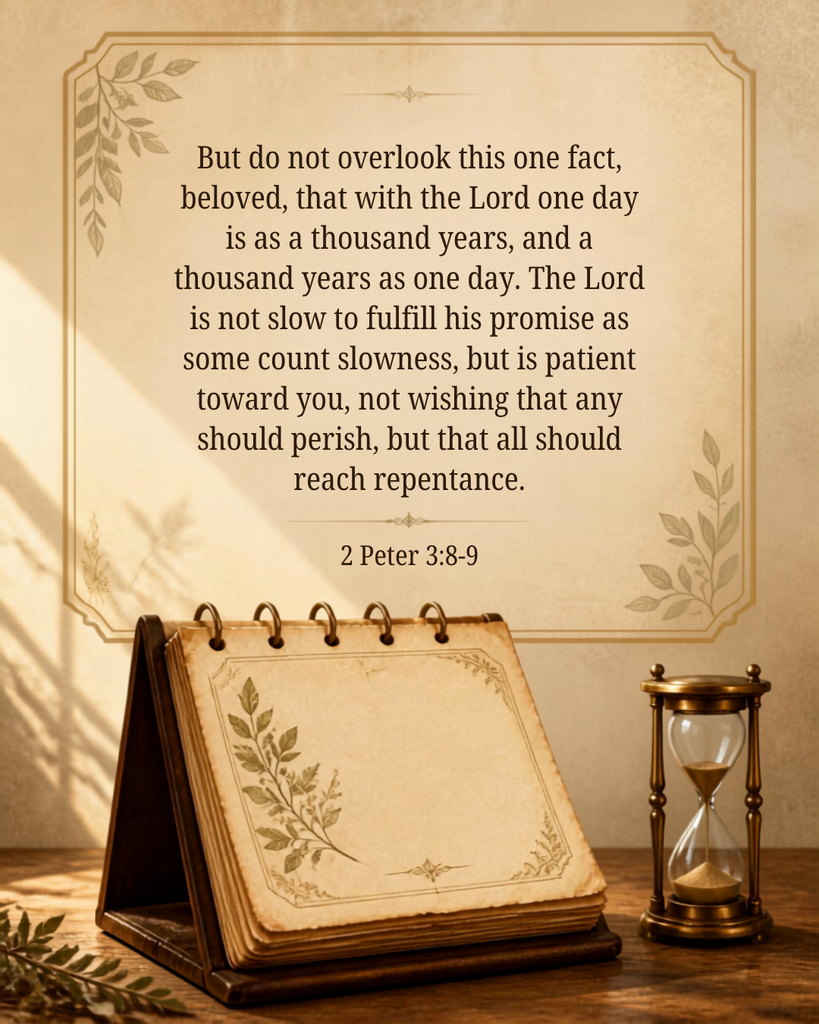
Peter wrote this letter to believers who wondered why Jesus hadn’t returned yet. People had begun mocking Christ’s followers, asking, “Where is the coming He promised?”

With divine wisdom, Peter reminded them that God’s timing differs from ours. His patient endurance allows more people to turn to Him. Our heavenly Father doesn’t want any to perish. In our waiting, He does some of His best work.

Like He did with me.

In the previous decade, before I met Ron, God healed my brokenness and taught me about relationships. Through His Word, people, and circumstances, the Lord mended the hurts and helped me understand what a healthy relationship looked like. And then, when the time came, He brought me to Ron.

Sometimes we interpret God’s timing as absence, but the Lord does more in the waiting than we can see. The Creator doesn’t live by our clocks, calendars, and expectations. He sees the entire picture, while we see only today.

With purposeful patience, God works.

The Maker of Time never comes late. He doesn’t forget or treat time carelessly. But His patient purpose unfolds according to His perfect plan.

No matter the season of waiting, trust God’s work. What we see as a delay, He sees as an opportunity for people to turn towards Him. Build active trust by reminding yourself that the Lord works all things to the good for those who believe and trust in Him.

In our waiting, our Father draws us closer to Him and teaches us lessons we can learn no other way.

Journal Questions:

  • What are you currently waiting on God for? How does this passage challenge the way you view His timing?
  • Have you ever mistaken God’s silence or delay for His absence? Looking back, can you see how His timing differed from what you expected?
  • How can you practice trusting God’s patience and purpose while you wait? What is one thing you need to surrender to His timing today?

Application:

Write down three things God has taught you during periods of waiting.

Trusting God

Faith in the Waiting

Two-minute read.

Ron and I plan our vacations months, even years, in advance. We planned a trip to Maine this year and waited with anticipation. We originally scheduled the trip three years ago. But when my father-in-law’s health issues progressed, we had to cancel it. And so, as the days grew closer to our departure date, I battled anxiety that something would happen and we would have to cancel it.

While we waited, we did what we knew to do: save money, prepare travel necessities, and pray.

All went well. We left on time, had no major incidents, and enjoyed a new adventure in the Northeast. Looking back, I can see God’s hand in both the cancellation of the first trip and the perfect timing of the second one. Throughout the planning and preparation, I learned that the Lord not only answered our prayers, but also remained faithful during the waiting.

Sometimes, God changes our circumstances quickly. When we canceled the first trip, we did it mere weeks before our departure date. Three years passed before the next one, a long season of waiting. Our second trip differed completely from the first one, but turned out better than we ever imagined.

The Lord didn’t waste the waiting.

Instead, He prepared us in ways we needed for the second trip. Our waiting caused us to appreciate and enjoy the trip more. Because of the cancellation, we had more time to study and fine-tune our plans, making the most of our time. We also learned to trust God more as we let Him guide our steps.

David, the author of Psalm 27, doesn’t say, “Everything is already fixed.” Instead, he tells himself to wait for the Lord. Staying faithful while trusting God to act helps us mature. We may want immediate action, clear direction, and a quick resolution, but the Creator wants to deepen our faith, strengthen our courage, and teach us to depend on Him rather than our circumstances.

Waiting courageously when standing in the unknown requires strength we can only receive from the Savior. Christ gives us the courage we need to wait with confidence, knowing the bravery needed to wait well.

You will never regret waiting on the Lord.

Sometimes, God does His deepest work in us during the waiting.

Journal Questions:

  • What are you currently waiting on God for, and what makes the waiting difficult for you?
  • How can you choose courage and continue moving forward while you wait for God’s timing?
  • What might God be teaching you about trust, patience, or faith during this waiting season?

Application:

Memorize Psalm 27:14 and use it to help you wait well.

Trusting God

Delays Are Not Denials

Two-minute read.

 “God, where are You? Why aren’t you doing something?”

Two questions that Habakkuk asks the Lord in his prophetic book. Seeing Judah filled with violence, injustice, and wickedness, Habakkuk wants answers.

As we all do when we don’t understand why God allows things to happen.

Habakkuk shows us an honest conversation with the Lord. Sharing with God his heart, the prophet doesn’t hold back and waits expectantly for answers.

But he doesn’t get the answers he wants.

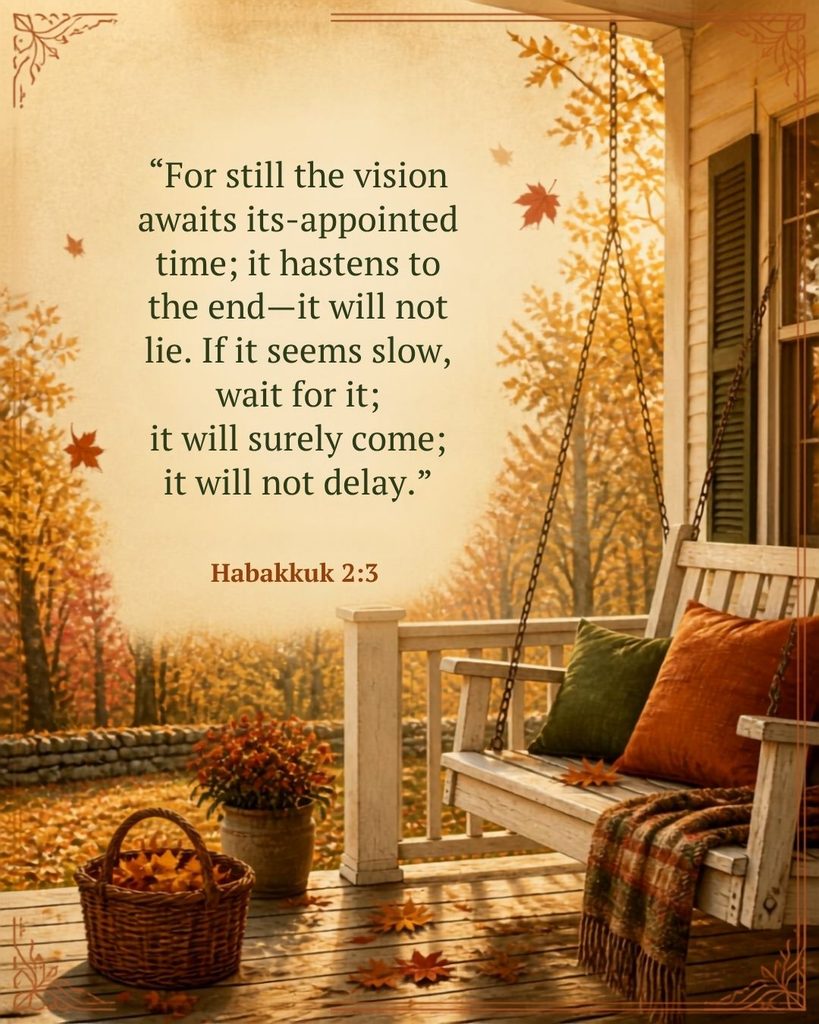
Often, God responds in a way that may seem even more confusing. Because we only see in part, we don’t understand the Lord’s logic. But the Creator sees everything, beginning, end, and middle. He already knows the outcome and what needs to happen to achieve it. God promises victory, but it may seem delayed.

The Lord doesn’t deny that His promises may feel slow.

As an impatient person, I can attest to that truth. The Lord does fulfill His promises, but He doesn’t do it according to my timetable. Where I want things done yesterday, God does them in His time and way.

Delays don’t mean denial.

First, we must understand that the Lord answers every prayer. He either says yes, no, or wait. The Lord told Habakkuk to wait with confidence. Active trust says, “I don’t see it yet, but I trust the One who does.” God’s purposes don’t depend on our ability to see them unfolding. What the Lord has determined will happen in His appointed time.

God doesn’t give us the date.

He gives us the promise.

Faith learns to live between those two things.

Remembering how the Lord answered in the past will help you wait better in the present. Focusing on what God did before helps us trust Him now. We don’t have to see or understand the Lord working for Him to accomplish His task. Whatever the Lord has planned for His purposes will come at the right time.

God doesn’t ask us to understand the timing. He asks us to trust it. The vision may seem slow. The answer may seem late. The door may seem permanently closed.

But the Lord continues to work.

And while He does, we can wait, watch, and trust.

Journal Questions:

  • What are you currently waiting on God for, and how has the waiting affected your faith and trust in Him?
  • Where might God be asking you to be patient rather than trying to make something happen in your own timing?
  • What would it look like for you to trust that God is working—even when you cannot see the answer yet?

Application:

Remember how God came through for you before and trust He will do it again.

Trusting God

God’s Perfect Timing

Two-minute read.

As a burgeoning gardener, I’ve learned much about seasons. In our first garden, we planted too late in the season. This year, I planted it a little early. Thankfully, I still harvested, but I had to cover the plants more than once to keep them from freezing. When God’s word speaks of season, I have a deeper understanding of planting and harvesting than ever before.

Not every season feels beautiful.

Some seasons carry pain and confusion, like when I planted zucchini and squash. At first, they flourished, then I noticed the leaves dying and wilting. Upon closer inspection, I saw the squash bugs that had taken over the plants, feeding on the vines and killing them. My confusion disappeared when I discovered the culprit, and I grieved the loss of my crops.

From planting the seed to harvesting the vegetables, I must wait and pray. Whether the plants take weeks or months to mature, I can’t rush the process. Instead, I make sure they have enough water and keep the weeds at bay, praying over the plants as they grow and hoping for a bountiful harvest.

No matter the season, the Lord remains sovereign over them all.

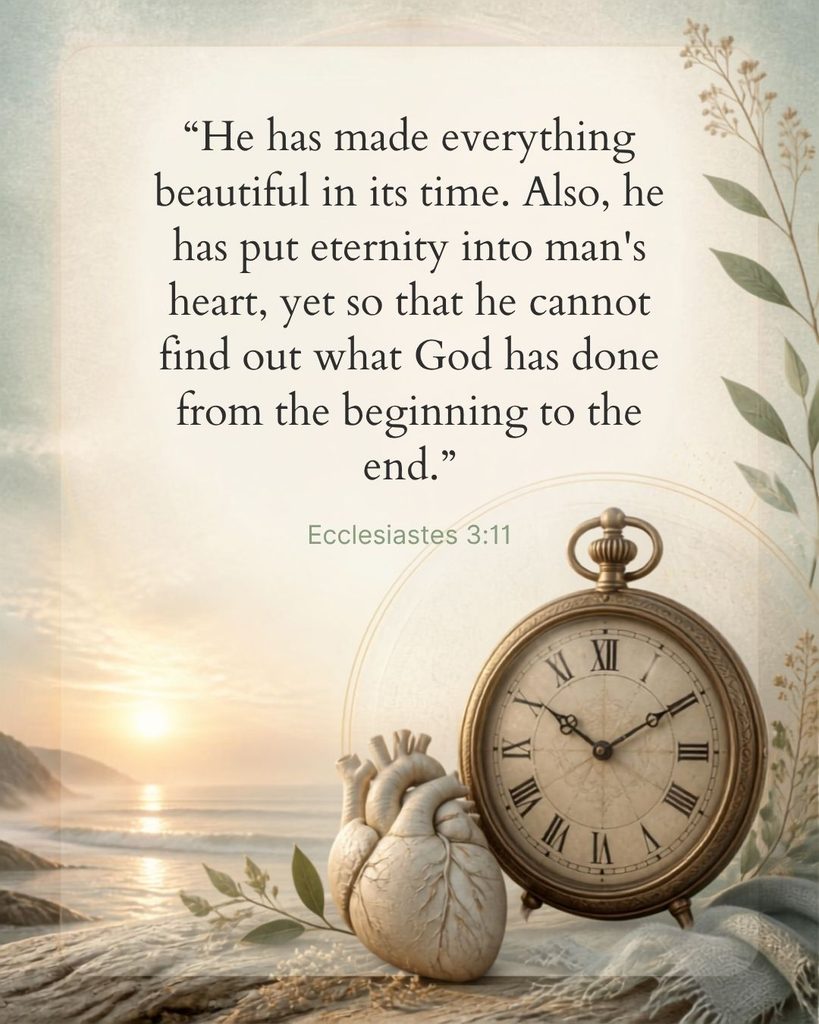
God has made everything beautiful for its own time.

Solomon reminds us that the Lord sees the whole picture when we can see only a small piece. We will have seasons of suffering and pain, but God continues to work even when we don’t understand, and He uses everything for good for those who believe and trust in Him. When we want God to make something beautiful right now, He says, “Trust me with the timing.”

Because the Lord has planted eternity in our hearts, we crave something more than the temporary world we live in today. We long for things to make sense, for lasting relationships and significance. The longing for something eternal points us to the Creator.

God made us for more than getting through daily routines. He created us with an awareness of something bigger than we can see. We can’t see the scope of the Lord’s work; we only see today, but God sees the beginning, middle, and end. He knows the seasons and the outcomes. When we trust in the Savior, He leads us through the seasons and helps us discover eternity with Him.

Journal Questions:

  • What season of life am I currently in, and what might God be teaching me through it?
  • What is something I don’t understand or can’t see clearly right now that I need to trust God with?
  • Where do I need to remind myself that God sees the whole picture, even when I can only see today?

Application:

Release your demand to understand everything and trust God with the parts of your story that remain unfinished.

Trusting God

Waiting Isn’t Wasted

Two-minute read.

Waiting seems passive, but it’s not. Active trust looks to God with an attitude of trust, patiently depending on Him to answer. Placing our confidence in the Savior leans into His promise of strength and renewal, something we can’t produce on our own.

Like most people, I struggle with waiting. The Lord’s timing does not align with mine most of the time. I want things yesterday. God doesn’t see things the way I do. My heavenly Father sits on the throne, not me. Whenever I question the waiting, I’m reminded of His sovereignty. Thinking of other periods of waiting, I remember how God delivered the victory at exactly the right time and in the right way.

Everyone’s waiting.

If you asked the people around you, “Are you waiting for anything?” They would say yes. People wait for the perfect job, the perfect spouse, and the perfect paycheck. In their minds, they create a narrative of what those things look like. The more detailed they get in their story, the harder the waiting seems. And when God doesn’t do what they thought, look out, trouble brews.

But if we wait with active trust, we won’t create narratives that fall short of reality. Instead, we’ll keep a continuous conversation with God going, asking Him for His will, not ours. When questions arise, we can ask Him, and He will answer. But in His time, not ours. And one day, when the Lord calls us home, we’ll have the answers He didn’t give us in this life. But until then, we can trust.

Some days, you may feel like you’re soaring; other days, every step takes energy. Some days, you can barely manage to put one foot in front of the other. No matter the season, God’s faithfulness doesn’t change. Waiting for Him to move says, “Lord, I don’t have the strength for this on my own, but I trust You to give me what I need for today.”

With God, you can experience the miracle of walking without fainting and soar high with the eagles.

Journal Questions:

  • What area of my life am I trying to handle in my own strength instead of waiting on and trusting God?
  • Am I in a season of soaring, running, or simply walking? What might God be teaching me in this particular season?
  • What would it look like for me to intentionally wait on the Lord this week and trust Him to provide the strength I need?

Application:

Turn your waiting into active trust through prayer.

Trusting God

Open Hands

Two-minute read.

When David wrote these words, he contrasted the temporary success of wicked people with God’s lasting faithfulness. We’ve all had that feeling of unfairness.

Doing your best at work but getting overlooked.

Watching a dishonest person prosper when you tell the truth.

Loving someone who doesn’t love you back.

Praying faithfully and someone else receives the answer you desperately wanted.

Doing the right thing and experiencing heartache.

Seeing someone who hurt you appears to have an easy, successful life.

The list can go on and on. David wrestled with the reality that people who do wrong sometimes seem to get ahead while people trying to do right struggle. I know I’ve wrestled with this myself.

David doesn’t pretend unfairness doesn’t exist. He acknowledges it.

But then the king reminds us that the story doesn’t end there. The wicked may appear to flourish in a season, but their success doesn’t last. God’s justice, goodness, and faithfulness ultimately prevail.

Therefore, David tells us what we should do: commit everything to the Lord, trust Him, and He will help you.

God doesn’t always explain why something happened. But we can trust the One who sees the whole picture when we can only see one page. Trusting the Lord with everything takes the burden off our shoulders. We no longer must think about fairness, because we know, at the end of the day, God will make all things right. And He uses everything for His good.

And so, every Sunday morning, I commit my plans for the upcoming week to the Lord. Opening my calendar and my Bible, I pray over every appointment and give it to God. Then, I let it all go and trust Him to work out the rest. When things get canceled, I know God has a reason. If something gets added, I know He has a purpose in it. And when everything changes, I let the Lord lead the way.

As I close my prayer time, I write these words: “My life is Yours, Lord; use me as You will,” completely surrendering my life, my calendar, and my desires to Him.

The wicked may flourish for a moment, but the Lord always wins.

Place life’s unfairness in the Lord’s hands. We don’t have to understand for God to work. We only have to trust.

Journal Questions:

  • What situation in your life feels unfair right now, and what would it look like to truly place it in God’s hands?
  • Are you trusting God with the outcome, or are you trying to control how and when things should work out?
  • What is one thing you can do today to release your worries and commit your plans, relationships, or future to the Lord?

Application:

Lift your concerns to the Lord, and ask Him to use you as He will.