
Trusting God

Trusting God with the Unknown

Two-minute read.

In high school, I worked at Montgomery Ward in their women’s department. One night, not long before my graduation, I had a meltdown. While inventorying scarves, my thoughts spiraled out of control, and I began crying. Worry about what would happen in the months ahead consumed me as I faced the brink of adulthood. My co-worker tried to assure me things would work out, but my anxiety won that battle.

And things did work out. But I didn’t know that then.

Just like the Israelites didn’t know what would happen to them when they lived in exile in Babylon. Far from home, living in circumstances they hadn’t chosen and couldn’t change, they must have wondered about their future. Had God forgotten them? Would they ever have their normal lives back? What did their future hold?

Everyone wonders about the future.

God understands our curiosity.

And He gives us a message: He has it under control.

Relaxing into the Savior’s plan for our lives should come easily, but it doesn’t. Knowing Christ’s miraculous death and resurrection, we have victory over whatever comes our way. But we still need reassurance that God has a plan for our lives, and we need to trust it.

The Israelites couldn’t see what their future would look like, and neither could I all those years ago. My anxiety and worry caused me to miss out on the moment. Life doesn’t let us skip difficult seasons; we must go through them. And in those valleys, the Lord teaches us valuable lessons that transform our lives. We learn to trust Him, even when we don’t understand.

Our inability to see the plan doesn’t mean God doesn’t have one.

Hindsight gives us 20/20 vision. Decades later, I can see the Lord’s hand in my life, guiding, directing, and protecting me along the way. I didn’t need to spend that evening in anxiety; I only needed to trust in God’s plan for my life and let it unfold.

The Lord sees the beginning, middle, and end.

We only see today.

But we can trust; God hasn’t forgotten us.

Hope lies ahead, as He continues to write our story.

Journal Questions:

  • What area of my life feels uncertain right now, and how can I choose to trust God with what I cannot see?
  • Have I been so focused on where I want to be that I’m missing what God may be doing in my life right now?
  • What would it look like for me to hold onto hope and take one faithful step toward the future God has for me?

Application:

List ways God has provided for you in the past and let that strengthen your trust in Him for the future.
Trusting God

Letting Go of Yesterday

Two-minute read.

Since I started following Jesus, He has transformed my life.

The Lord has helped me work through my anger issues and process the losses I’ve experienced. God continually refines me. Over the past weekend, I suffered the consequences of a social media post I made in frustration: nothing horrid, but one I regret posting because it unintentionally offended a friend. As I pray through how to move forward, growth happens, and the Lord transforms my life a little bit more.

Living for Jesus means continual spiritual progress.

We never “arrive.”

God always has more to teach us.

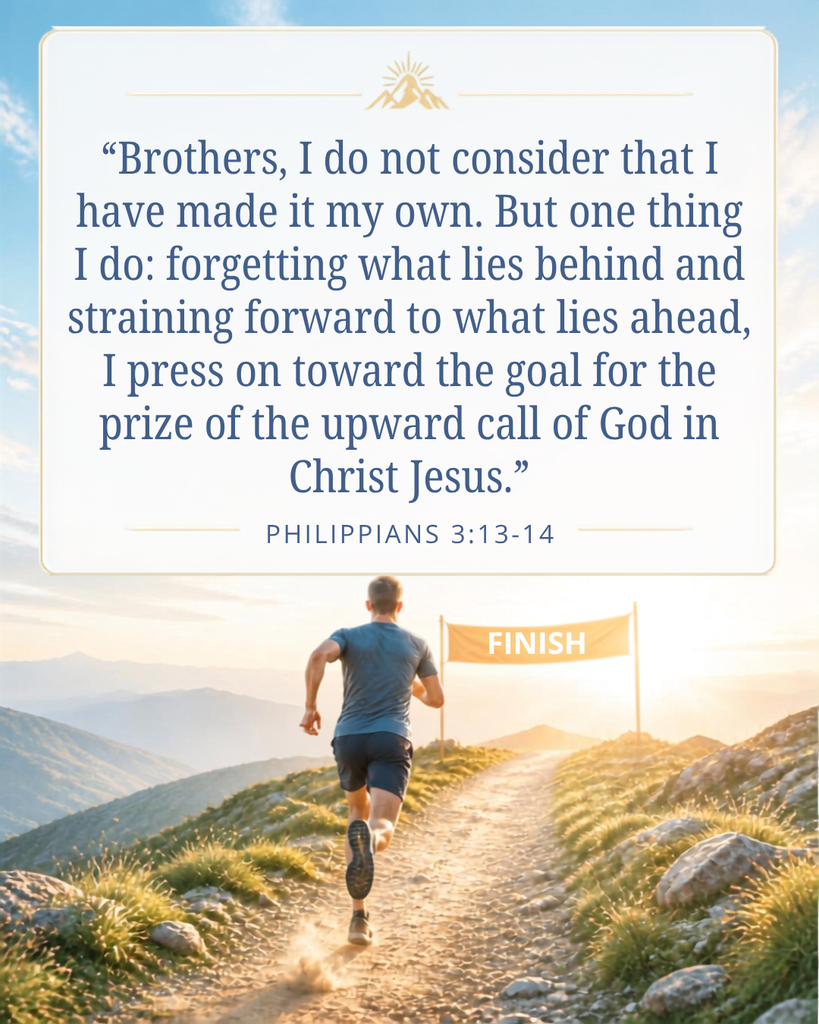
Paul, the author of Philippians, accomplished an extraordinary amount for Christ, but he didn’t consider himself spiritually finished. And we shouldn’t either. Jesus’s followers never stop growing and learning; our lives are in constant sanctification as we continue to pursue the Savior.

Sanctification means becoming more like Christ. First, we experience justification, becoming right with God by repenting of our sins, and then transformation begins. Each morning, I have things to confess to the Lord. By surrendering my sin, God teaches me how to make amends, humble myself, and persevere as I try again. Sanctification never stops; the ongoing process of becoming more like Jesus only ends when God calls us to our heavenly home.

We must let go of our past, failures, and successes to keep moving forward. Failures keep us looking backward with regret. But our successes can cause us to believe we’ve done enough. In the Lord’s economy, we always have more to do. He gives us a purpose to fulfill, and we can only do that when we let go of the past and move forward with Him.

“Onward and upward!” Famed pastor Charles Spurgeon preached on May 25, 1873. His famous sermon focuses on these verses and reminds us, 150-plus years later, that the race doesn’t end. We must keep our eyes on Jesus and run towards the eternal goal.

Learn from your mistakes.

Enjoy your successes.

Then move onward.

Saved doesn’t mean finished. Our security in Christ’s gift doesn’t mean we stop growing. With the seed of repentance and acceptance of the Savior, transformation begins. Paul didn’t casually stroll towards the end goal; he stretched forward, longing for more. And we should as well.

Don’t live life looking in the rearview mirror. God’s plan unfolds each day. Each morning, we get to choose to follow Him again.

Journal Questions:

  • What part of my past—whether a failure, disappointment, or even a past success—do I need to surrender to God so I can move forward?
  • In what area of my life is God inviting me to grow and become more like Christ right now?
  • What is one practical step I can take this week to “press on” toward Christ and continue growing in my faith?

Application:

Write down your biggest regret on paper. Then crumple it up and throw it away. Ask God to help you let it go.

Trusting God

Releasing Fear

Two-minute read.

Driving the winding mountain road to the top of Cadillac Mountain in Acadia National Park, my stomach fell. Sharp drop-offs afforded incredible views and fed into my fear of heights. By the time we reached the pinnacle, fear engulfed me, and I told my husband I would stay in the truck.

Which I did.

When Ron went to take in the view, I opened the Bible app on my phone and turned to Psalm 121:


“I lift up my eyes to the hills. From where does my help come? My help comes from the Lord,
who made heaven and earth. He will not let your foot be moved; he who keeps you will not slumber.”

Psalm 121:1-3

Over and over again, I read the Psalm, especially verse three, “He will not let your foot be moved.” Eight words that helped me overcome my fear. “God’s holding me up,” I thought. Praying, I asked Him to remove the fear and anxiety from me and give me the strength to gaze upon His creation.

He did.

When Ron got back in the truck, I surprised him with my determination to take in the miraculous view. Because we had our dog Ruby with us, he stayed in the truck with her. Then I went and gathered with the rest of the tourists at the highest peak on the East Coast of the United States and beheld the Lord’s glorious work.

God lives with us in the present.

We need not fear.

He goes where we go.

To the highest mountains and the lowest valleys, our Savior walks with us. He keeps our feet from stumbling and does not sleep, always watching over us. Grasping the Lord’s love for us will give us the confidence to overcome our fears and find victory in Him.

Instead of focusing on your fears, focus on your Savior. Ask Him to give you the strength to climb the mountain and enjoy the view. Surrendering our lives to the Lord could seem daunting. But letting go of our desires opens the door for God’s. And His ways far outweigh ours. In Him, we find life to the fullest.

Journal Questions:

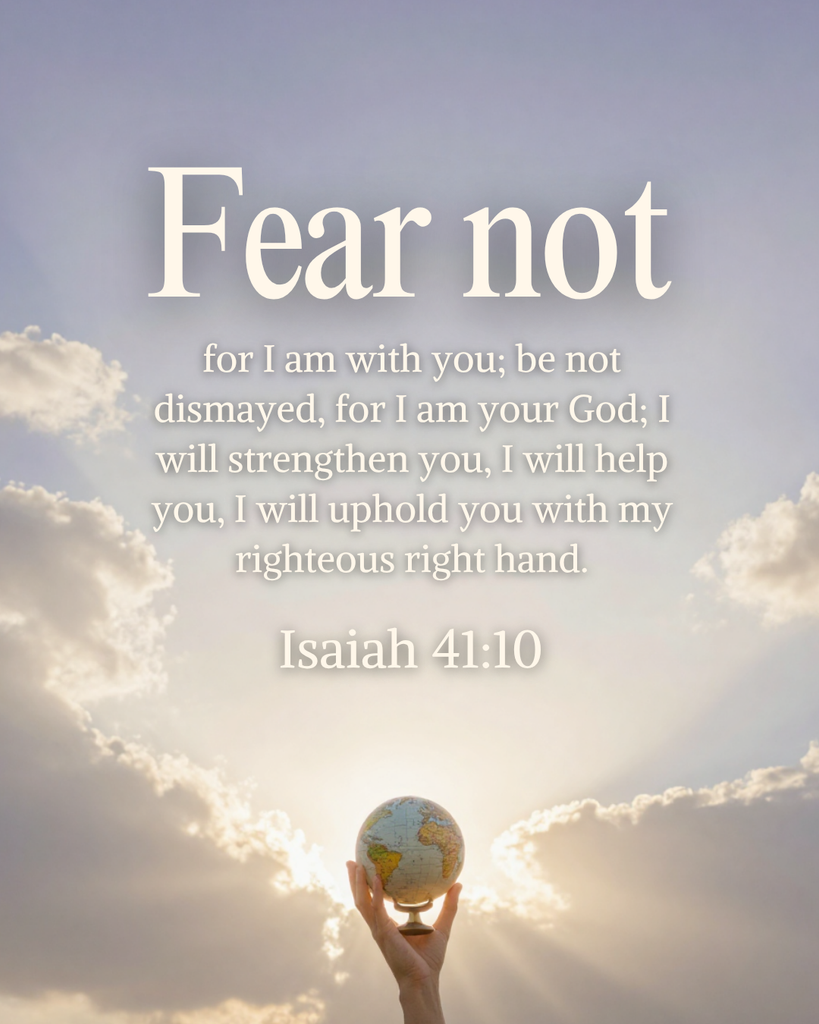
  • What fear or situation are you facing right now that God is asking you to place in His hands? What would it look like to trust Him with it?
  • God promises, “I will strengthen you and help you.” When have you experienced His strength or help in a difficult season? How does remembering that experience encourage you today?
  • What would change in your thoughts, choices, or attitude if you truly believed that God is with you and will never abandon you?

Application:

Ask God for the strength to take the next step. Then take it.

Trusting God

Surrendering Control

Two-minute read.

What do you do when you don’t know which way to go?

On a recent vacation in New England, we rode our bikes around Acadia National Park. Lined with carriage roads donated by John D. Rockefeller. Forty-five miles of motor-free trails create a biker’s heaven. Rustic guardrails created from granite blocks line the edges, called Rockefeller’s teeth. Decorative stone bridges command attention as you enjoy the scenery. And now and then, we came to a crossroads that required a decision.

Every time we didn’t know which way to go, we stopped and looked at the map. Once we got our bearings, we chose a direction and rode until we reached the next one. Eventually, we covered all 45 miles and made memories we’ll cherish.

God’s word gives us a roadmap for life.

When we don’t know which way to go in life, the Lord directs us. But first, we must stop and seek him. Like consulting a map at a crossroads, we only know which path to take by consulting God.

The Lord not only knows the path we should take but also straightens it for us.

During our rides around Acadia, we rode around a lake and a mountain. When we started our trek up the steep inclines, I thanked God for my electric bike and used every ounce of it to reach the summit. We rarely had straight, flat paths. But when we did, we appreciated them.

Riding on even ground requires less energy. We can go further because we preserve strength. With the Lord as our navigator, we will avoid mountains and valleys. The more we lean into the Savior and trust His ways instead of ours, the better we will find the best path to follow.

When you don’t know which way to go, stop and consult the manual. Open God’s word and spend time in it. Seek His guidance, and the Lord will provide it. Surrendering control to the Savior and acknowledging Him straightens our path and gives us solid direction.

Divine navigation leads to the best destinations.

Journal Questions:

  • What situation in your life are you struggling to trust God with because you want to understand or control the outcome?
  • What would it look like for you to seek God’s will before making decisions instead of relying solely on your own understanding?
  • What is one “next step” you believe God may be asking you to take, even though you can’t see the whole path ahead?

Application:

Acknowledge God in your situation and let Him make your path straight.

Trusting God

Trust God

Two-minute read.

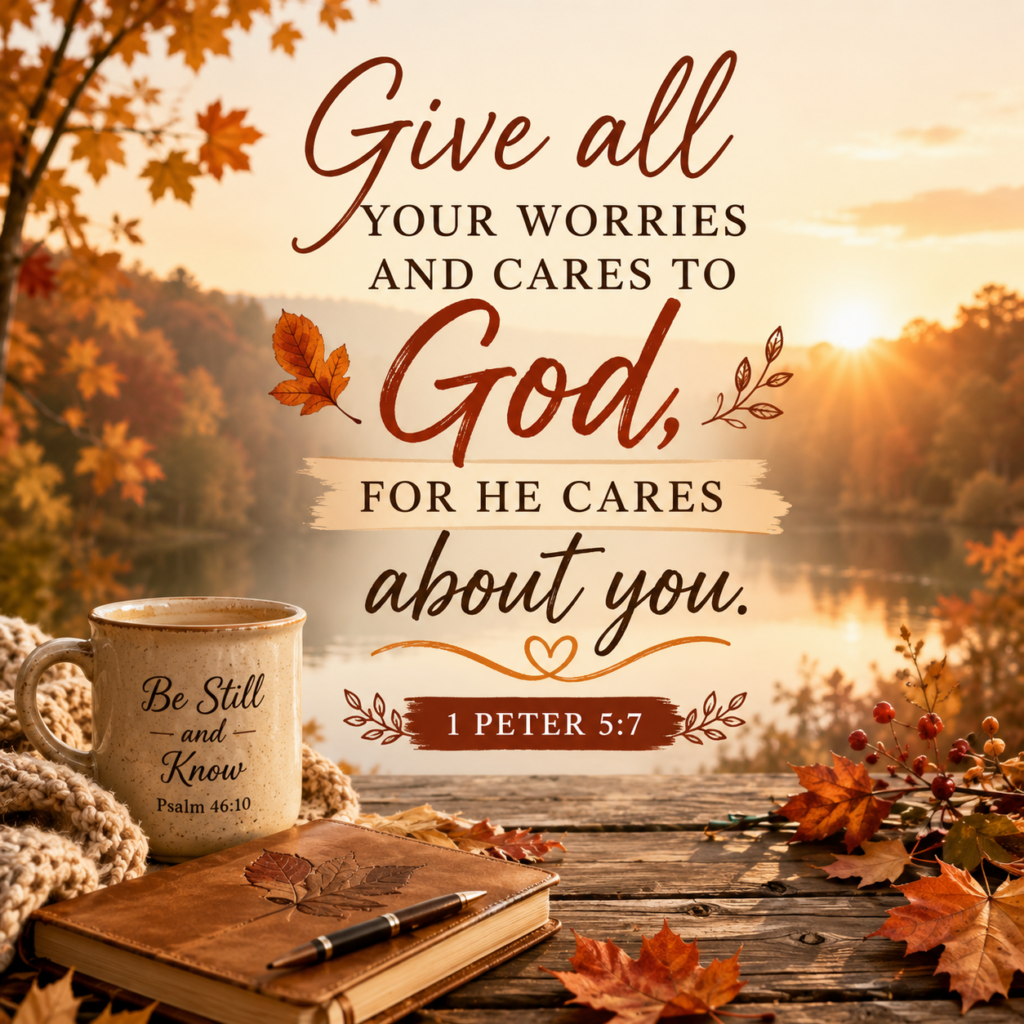
Peter wrote to Christ’s followers living in different regions of Asia Minor, modern-day Turkey. The disciple knew they faced persecution, social rejection, and uncertainty because of their faith. In his letter, Peter encourages them to remain steadfast, to trust God, and to remember that we have temporary suffering, but the Lord’s promises remain forever.

“Give” in today’s verse means “to throw upon” or “place completely on someone else.” Like carrying a heavy log in your arms, you move slowly, your arms quivering under the exertion, your body tired. But then someone comes along and takes the load. You no longer bear the burden and can walk freely because they carry it for you.

God wants to carry our burdens.

He wants us to give Him the load we carry. Worrying about our spouse and children? Give it to God. Scared about losing your job? Unload the fear onto the Savior. Unsure of what the future looks like? Let the Lord carry your uncertainty. Overcome with grief? Cast it upon Jesus and let Him give you comfort.

When you notice anxiety of any kind rising, pause and pray before reacting. Tell the Lord what troubles you. Write your worries in a journal, then pray over each one. Replace your anxious thoughts with God’s promises. Then thank the Savior in advance for His faithful care. Each time worry returns, choose again to place it in the Creator’s hands.

Worry and trust can’t coexist. Every anxious thought becomes an opportunity to choose faith. Trust doesn’t mean we have all the answers; it means we know the One who does. We serve a Savior who knows us intimately. He never overlooks us. The Lord sees our tears, hears our prayers, and walks beside us through every season.

God draws near to us when we draw near to Him. Constantly present, the Lord remains compassionate and faithful. He cares so deeply for us, knowing every concern on our hearts. When we choose to place our worries, fears, and unanswered questions in His hands, God fills our hearts with His peace, reminding us He faithfully cares about every detail.

Journal Question:

  • What burden have I been carrying that I need to surrender to God today?
  • Why is it sometimes difficult for me to trust that God truly cares about every detail of my life?
  • How has God shown His loving care for me in the past?

Stress Buster:

Write down one worry, then pray over it and imagine placing it at the foot of the cross.

Trusting God

Remember God’s Faithfulness

Two-minute read.

Charles Spurgeon, called the Prince of Preachers, lived in the mid-to-late 1800s. As a Baptist preacher, he had powerful sermons, a deep love of Scripture, and an ability to explain biblical truths in ways ordinary people could understand, which made him legendary. Spurgeon described memory as “faith’s handmade.” He taught that remembering God’s past mercies fuels present trust. Every answered prayer becomes a reason to trust Him again.

Asaph, the author of Psalm 77, led Israel in worship. In deep anguish, overwhelmed by trouble, unable to sleep, he wrestled with questions about the Lord’s presence. Honest questions born out of pain, not unbelief. But then things change when he gets to verse 11. Asaph’s situation remains the same, but he shifts his focus. Instead of dwelling on his fears, he deliberately chooses to remember God’s faithfulness. His memory becomes faith’s handmade.

When we follow Asaph’s example and remember God’s past faithfulness, it will strengthen us. As we recall how the Lord has helped us before and the prayers He has answered, our faith will grow. Remembering His past provision helps us trust that God will provide in the future.

Our feelings don’t define the Savior’s character. Just because we feel alone doesn’t mean the Lord has abandoned us. When Asaph’s feelings told him God had forgotten him, the facts reminded him of the Lord’s faithfulness for generations. We have real feelings, but real doesn’t mean reliable. God’s character never changes.

Keeping a journal helps us remember God’s work in our lives. Recording answered prayers and unexpected blessings creates a personal testimony that can encourage us during future trials. As a writer, journaling comes easily to me. Each morning I write out my prayers, laying them at the foot of the cross. Reading back over them always surprises me because I often forget what I wrote.

When we choose to remember the Lord’s faithfulness, as Asaph did, it will strengthen us. As we reflect on God’s past works, it builds our present faith. Circumstances may not change immediately, but our perspective can. The Lord remains constant, even when our emotions fluctuate. Looking back on our Father’s faithfulness will give us the courage to face the future.

Journal Questions:

  • How has God been faithful in your life?
  • What prayers has He answered?
  • How can remembering His faithfulness reduce stress?

Stressbuster:

Write a personal testimony of God’s goodness.

Trusting God

God Works All Things Together

Two-minute read.

For the past week or so, I’ve made a new breakfast. Taking rolled oats, a little brown sugar, some blueberries, and a splash of milk, I mimic my friend Claire’s infamous Blueberry Oatmeal Delight. She cooks hers in a crockpot overnight, and it has a few more ingredients. The overnight mixture receives high praise every time we put it on the menu for one of our women’s breakfasts. Taking ingredients that taste ok on their own, mixing them in just the right amounts, and baking them makes something good out of something so-so.

In life, God takes everything that happens to us and works it for the good of those who believe and trust in Him. The bad moments that take our breath away can become reasons to praise the Lord.

When I unexpectedly lost my position at church, it devastated me. Pouring my heart and soul into my ministry, I felt angry and betrayed. But when I turned to the Lord and let Him lead me through the valley, He took that brokenness and made something good. Now, I’m grateful God pulled me out of that situation and changed my path. Looking back, I can see His hand in removing me from an unhealthy environment and leading me to a healthy one.

Paul’s words to the Romans emphasized “good,” referring to spiritual transformation rather than comfort. Through my job loss, God transformed me, drawing me closer to Him and maturing my faith. When my nephew died, one of the darkest days of my life, the Lord showed up for me, carrying me through that day and showing me a grace I would never have known any other way. Jesus told us we would have struggles in this world, but to take heart, because He overcame them. The longer I follow the Savior, the more I realize the truth of His words.

Paul doesn’t call everything good. Evil remains evil, and suffering causes genuine pain. However, God’s sovereignty can weave even painful events into His greater plan for His people. Those who love the Lord and have a relationship with Him will find hope in their darkest days.

The Lord can take our hardest chapters and use them to shape us into the image of Christ, accomplishing His eternal purposes, working all things to the good.

Journal Questions:

  • What difficult circumstance are you facing?
  • Where might God be working behind the scenes?
  • How can you trust His purpose?

Stressbuster:

Reflect on a past challenge God brought you through.

Trusting God

Let God’s Peace Rule

Two-minute read.

Driving in heavy traffic on the interstate with cars weaving in and out causes my anxiety to kick into high gear. Motorcycles roaring out of nowhere instantly raise my blood pressure. My hands tighten around the steering wheel, and frustration builds, making it easy to react in anger.

But then God.

When Christ rules our hearts, we will experience His peace, even while driving in heavy traffic. Remembering that Jesus died for that person who just cut me off in traffic helps me remain calm. God transforms our hearts as we trust in Him. Our circumstances don’t change, but the Lord steadies us in them. Focusing on the Savior protects our divine peace and helps us remain calm in the face of adversity.

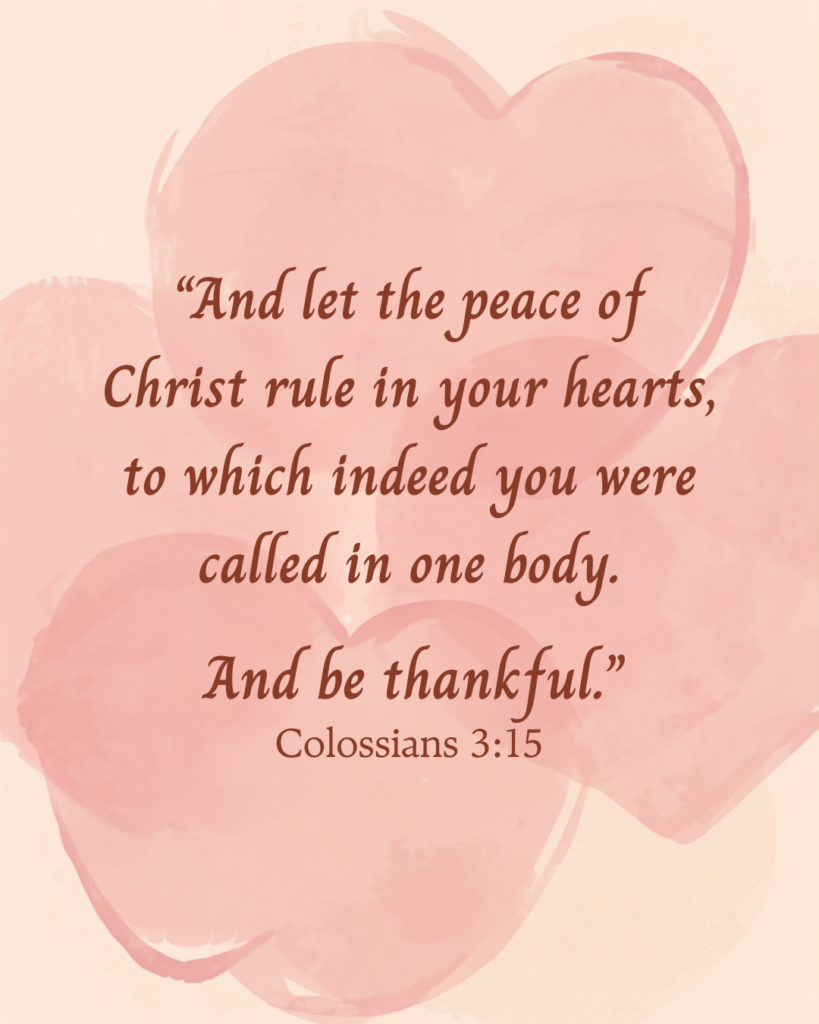
In one of Paul’s prison epistles, He wrote to the believers in Colossae, encouraging them to remain rooted in Christ. Dealing with false teachers, Paul tells them to focus on God’s peace and let it rule their hearts, acting as a referee. When faced with difficult decisions, conflicts, fear, or uncertainty, allow the Savior’s peace, not our emotions, anxiety, or circumstances, to have the final say.

Christ’s peace doesn’t mean the absence of conflict, but the deep confidence that comes from knowing Jesus walks with you through it. The Lord doesn’t lose control; He always works for our good.

And as members of one body, God calls us to live in peace.

Which means that when I encounter an irresponsible driver on the interstate, I pray for them, asking for God’s protection over their reckless behavior. And I pray they know Jesus and love Him. A simple prayer allows me to remain in the Lord’s peace and not let a few moments on an interstate ruin my entire day. Protecting unity means forgiving quickly and speaking gently. When we choose humility over pride and listen before responding, we’ll unite people rather than separate them.

Lastly, Paul calls us to practice gratitude daily. As we shift our focus from what we don’t have to what we do have, we will realize that God has already provided all we need. No matter what the storm, the Lord supplies what we need to survive it. A thankful heart leads to a peaceful heart as we remember God’s faithfulness.

Peace requires courage and intentionality. Unity requires humility. And gratitude requires thankfulness. When we focus our eyes on Jesus, we have all the tools we need to let God’s peace rule our hearts.

Journal Questions:

What is disturbing your peace?

How can you invite God’s peace into this situation?

What are you grateful for today?

Stressbuster:

Spend ten minutes in quiet prayer.

Trusting God

Releasing Resentment

Two-minute read.

In life, things happen that cause us resentment. And if we don’t learn how to release it, we can permanently damage relationships. Thankfully, we serve a Savior who tells us what to do: forgive.

Healthy relationships require grace because we all need it. Rather than expecting perfection from others, God calls us to respond with patience and understanding. Paul tells us to forgive anyone who offends us, not based on whether they deserve it or whether they apologize, but on the basis of what we have already received from Jesus.

The Lord didn’t wait until we earned His forgiveness; He freely offered it through Christ’s sacrifice on the cross.

When I went to the gas station, a young girl pulled into my spot, shaking her head and mouthing, “Not today, old lady. This is mine.” I thought of Jesus’ words, and I tempered the rising anger. Instead of responding to the rude behavior, I asked the Lord for help. Putting the car in reverse, I moved to another spot and, with divine help, let go of my resentment as I filled the gas tank.

By the time I got home a few minutes later, I had forgotten the incident, not allowing it to ruin my day. We do have the power to forgive. Christ gave it to us. Although I know some things take more work to forgive than others, when we tap into the Savior’s divine strength, we can release resentment, forgive the trespass, and move on with our day, not allowing the offense to steal our joy.

Forgiveness doesn’t pretend the offense never happened or excuse sinful behavior; it doesn’t always mean reconciliation. But forgiveness releases the debt you feel someone owes you and lets you choose not to let bitterness control you. Releasing resentment means deciding to place justice in God’s hands and allowing Him to heal your heart.

A process rather than a one-time event, forgiveness requires us to choose it repeatedly. Deep wounds may require repeated prayers of surrender. Personally, I find myself mentally giving the Lord my pain, visualizing lying at the foot of the cross. Then I ask Him to heal the wound and make me whole again. Each step towards forgiveness frees us from carrying the heavy burden of resentment and opens our hearts to experience God’s peace.

Journal Questions:

  • What hurt are you holding onto?
  • How has resentment increased your stress?
  • What step can you take toward healing?

Stressbuster:

Take a walk and pray for someone who has hurt you.

Trusting God

The Gift of Peace

Two-minute read.

Jesus spoke these words as He walked toward the greatest suffering He would ever endure, which makes His promise even more remarkable. Christ offered us peace not from a place of comfort, but from a place of complete trust in His Father.

The Savior’s peace rests on several unshakeable realities. Through His sacrifice we receive forgiveness of sins, reconciling us to God. The Holy Spirit lives in us, and Christ reigns over all things, securing for us an eternal future. Jesus doesn’t promise a life without storms, but he does promise His presence amid them.

When Jesus says “My peace,” it characterizes His own life and earthly ministry. The Savior remained calm during violent storms, and stayed composed in the face of opposition. Christ showed compassion under tremendous pressure. He trusted the Father completely, even as He faced the cross. Jesus offers believers the same kind of peace, not merely peaceful circumstances, but a heart anchored in complete confidence in God.

The world’s peace doesn’t last and usually has conditions, such as good health, financial security, stable relationships, comfortable circumstances, or political and social stability. When those things disappear, worldly peace often disappears with them. Jesus offers us something entirely different. Christ’s peace remains during suffering, endures through uncertainty, sustains us in grief, and provides confidence when we face an uncertain future.

God gives us a gift of grace, not something we earn or manufacture.

Therefore, Jesus wants us to have carefree hearts, not burdened by worldly troubles. The Lord doesn’t want fear to rule our hearts. We can bring our worries to Christ, trusting Him with whatever troubles us. The Savior has overcome the world and given us His Spirit. He remains sovereign, and Christ’s promises cannot fail.

When you have a troubled heart, remember that Jesus has already given you His peace. We can’t create it, but we can accept it by faith. As you rest in His presence and trust His promises, His peace steadies your heart, calms your fears, and reminds you that He never leaves you.

Christ doesn’t give us a fragile peace; it does not vanish when life becomes difficult. With quiet confidence we can rest in God’s presence, enjoying His peace, knowing His love never fails.

Journal Questions:

  • What steals your peace most often?
  • How is God’s peace different from the world’s?
  • What would peace look like today?

Stressbuster:

Sit in silence for ten minutes.